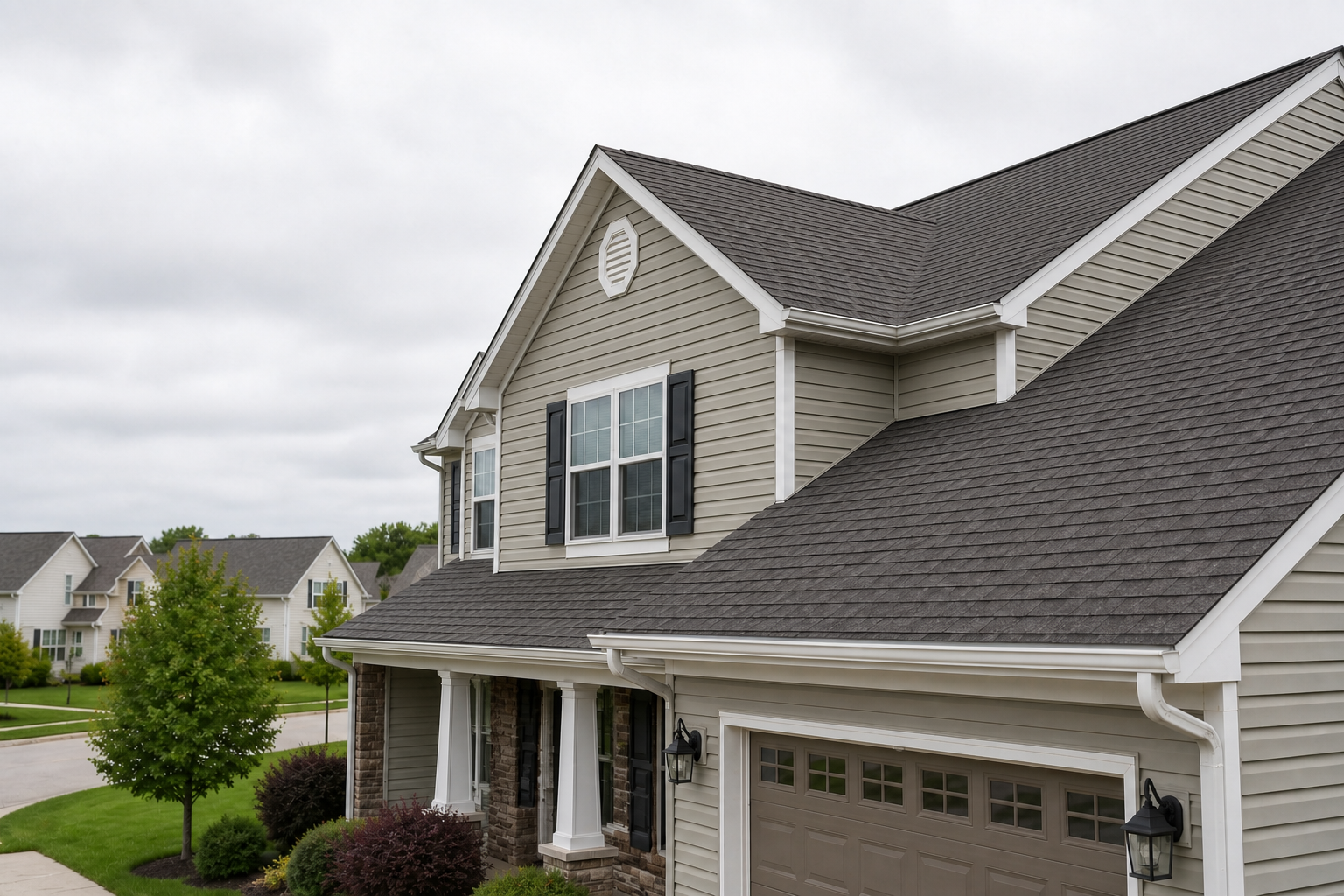
Wind and hail from a real prairie storm season
The wide open ground around Fargo means wind gets a long runway before it hits a house, and straight line wind during a summer thunderstorm regularly tears loose vinyl siding that was installed without enough clearance to expand and contract, or without every panel locked properly into the one below it. Hail is the other regular caller, and it dents aluminum trim and cracks brittle older vinyl without always showing damage that is obvious from the ground.
We check for both after a storm season, since a section that looks fine from the driveway can have panels that have popped loose at the bottom lock and will come off in the next wind event if they are not reseated.
What is behind older siding here
Pulling siding off an older Fargo house often turns up house wrap that has torn or gone brittle, or in some cases no wrap at all over the original sheathing. Window openings frequently have no proper flashing, just siding butted up against the trim, which lets wind driven rain track behind the wall during the kind of horizontal rain a summer storm brings. Any repair or replacement job starts with checking that layer, not just the visible siding.
Where sheathing has gone soft from years of water tracking behind it, we replace that before wrapping the wall and putting new siding on, since new siding over a wet wall just hides the same problem for a few more years.
Vinyl, fiber cement, and what holds up here
Vinyl siding is the standard choice for most Fargo homes because it handles our freeze and thaw cycle well and needs the least upkeep. We install it with the clearances the manufacturer specifies so panels can expand and contract without buckling in a hot summer or pulling apart in a hard freeze. Fiber cement is a step up in impact resistance against hail and holds paint through more temperature swings, at a higher material and install cost, and we recommend it on homes that see the worst of the open-field wind.
We steer people away from whichever material happens to be cheapest that week and toward whichever one matches how exposed their particular lot actually is.
Trim, flashing, and where water actually gets in
Most siding failures we get called for are not failures of the siding panel itself, they are failures at the trim: window and door casings without a drip cap, a water table at the bottom of the wall with no flashing, corner boards with gaps where two pieces meet. Every one of those needs proper flashing to shed water rather than trap it, and we rebuild trim to do that rather than just caulking the gap and calling it fixed.
Repair versus full replacement comes down to how localized the damage is. A single hail-damaged elevation or a section torn loose by wind can usually be matched and repaired. When the whole house is showing brittle, cracking vinyl at the same age, replacing the full house is the honest recommendation rather than patching it one storm at a time.